


Local Marketing
Why Reviews Are Your Best Marketing Tool
Use customer reviews to build trust, improve local Google visibility and win more trade jobs. Learn how to ask for stronger reviews and put them to work.
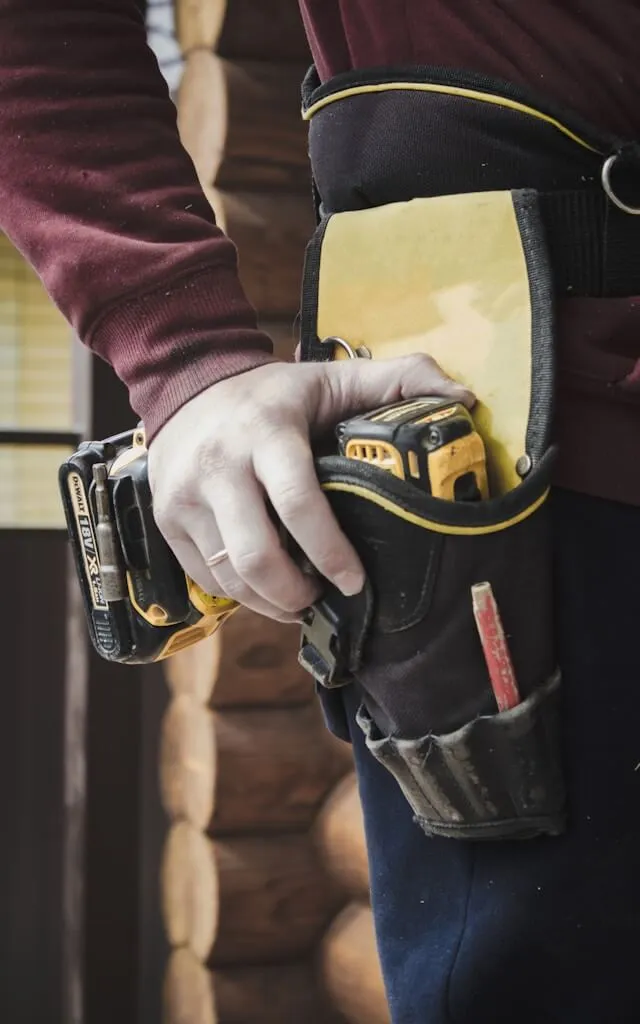
Ask any tradie where their best work comes from, and most will say word of mouth. Online reviews are word of mouth at scale, the best marketing tool tradies have, working for you 24/7 while you’re out on the job. Get a steady flow of the right Google reviews and they build trust, lift your local search rankings, and win you the close call on quotes. This guide covers why reviews are so important for tradies, plus a simple system for getting more of them without feeling awkward asking.
Why reviews punch above their weight
Most tradies spend their marketing budget chasing new tools: a website, some ads, or a boosted Facebook post. Reviews get treated as an afterthought, something that happens on its own if the work’s good enough. That’s a mistake. Reviews do four jobs no other marketing tool can match, and they cost nothing but a text message.
None of this means reviews replace a proper website or paid ads. They’re the multiplier that makes everything else work harder: the trust layer sitting underneath every other channel you invest in.
They build instant trust
A stranger’s honest review carries more weight than anything you can say about yourself. A row of recent five-star reviews tells a new customer “this bloke turns up and does good work” before you’ve even picked up the phone. You can write the best sales pitch in the world and it won’t land as hard as someone else vouching for you.
That matters more in the trades than almost any other industry. A customer is letting you into their home, handing over money upfront in a lot of cases, and trusting you to do the job safely and properly. Reviews are the shortcut that gets them comfortable making that call.
They help you rank
Review quantity, quality and how recent they are all feed into your local search rankings. Google wants to send searchers to businesses that real customers vouch for, so a steady stream of genuine reviews signals you’re active, trusted and doing good work right now, not three years ago.
This is one of the levers behind the Google Business Profile optimisation work we do for tradies: reviews sit alongside your business categories, service areas and photos as one of the strongest signals for showing up in the maps pack when someone searches “electrician near me” or “plumber near me”.
It’s also one of the few ranking signals a tradie can influence directly, without waiting months for content or backlinks to kick in. A concreter who picks up five genuine reviews in a month can see a real shift in maps-pack visibility faster than almost any other local SEO lever.
They win the close call
When two tradies look similar on paper (similar price, similar availability), the one with more (and better) reviews almost always gets the call. It’s often the deciding factor between you and the next name on the list. A customer scrolling through Google results isn’t reading your About page. They’re skimming star ratings and the last few comments, and making a call in under a minute.
Read a handful of recent reviews on your own profile right now and picture a stranger doing the same before they call. If what’s there wouldn’t convince you, it’s worth putting more effort into asking than into anything else on your marketing to-do list this month.
They cost nothing and work while you sleep
Unlike ads, reviews don’t stop the moment you stop paying. A good review sits on your Google Business Profile for years, working every time someone searches for your trade in your area. It’s the only marketing tool in a tradie’s kit that compounds for free.
How many Google reviews does a tradie need?
There’s no magic number, and anyone promising you a guaranteed ranking is having you on. What matters more than a specific count is the trend: are you getting a few new reviews every month, and are they mostly positive? A business with 40 reviews and a steady drip of new ones will usually beat a business with 100 reviews that all came from a single push two years ago and nothing since.
Aim for consistency over volume. A handful of fresh, genuine reviews each month does more for your rankings and your reputation than a one-off blitz.
It’s also worth checking where you stand before you set a target. Search your own trade and suburb the way a customer would, note how many reviews the top few results carry, and use that as your rough benchmark rather than a number pulled out of the air. Chasing a competitor’s real count is a more useful goal than chasing an arbitrary one.
A simple system to get more reviews
You don’t need anything fancy here. Most tradies who struggle with reviews simply don’t have a system; they mean to ask, get busy, and the moment passes. Fix that with a repeatable process:
- Ask every happy customer. The best moment is right after you’ve finished and they’re stoked with the work, while it’s fresh, not a week later when the memory’s faded.
- Make it one tap. Send a direct link to your Google review page by text message. Don’t make them hunt for your business on Google and figure out where to click.
- Put the link everywhere the job ends. A QR code on your invoice, a line in your job-complete text, a sticker in the van: the more places a happy customer sees the ask, the less you have to rely on remembering to say it out loud.
- Follow up once. If a happy customer hasn’t left a review after a few days, one friendly reminder text is fine. Leave it there; don’t chase.
- Respond to every review. A quick, genuine thank-you (and a calm, professional reply to any criticism) shows future customers you care and you’re still active.
- Keep it ticking over. A few fresh reviews a month beats a big burst once a year. Build the ask into how you close out every job, not only the ones that impress you most.
The best time to ask for a review is when the customer is happiest, the moment the job’s done and done well.
How to handle a bad review without making it worse
Every tradie gets one eventually: a customer who was never going to be happy, a miscommunication over price, or a genuine mistake on a bad day. How you respond matters more than the review itself.
Future customers reading your reviews will judge you on how you handled the criticism as much as the criticism itself. A business with a handful of three-star reviews and thoughtful, professional replies often looks more trustworthy than one with a suspiciously perfect five-star record and no replies at all. Keep the reply itself simple:
- Stay calm and professional, even if the review feels unfair.
- Acknowledge the customer’s experience without getting defensive about your side.
- Offer to sort it out directly (a phone number or “message us”) if there’s a real issue to resolve.
Never ask a customer to remove or edit a genuine review, and never post fake reviews for your own business. Both break Google’s content policies for reviews and undo the trust reviews are meant to build in the first place. Save the flagging option inside your Google Business Profile for genuine policy breaches (abusive content, reviews with no connection to a real job), not for customers who were simply unhappy with the work.
Reviews, your website and local SEO work together
Reviews don’t do their best work in isolation. A great set of Google reviews sends a customer looking for more proof. If they land on a slow, dated website with no case studies or testimonials, you’ve lost some of that trust straight back. A fast, professional website with a real testimonials section gives that same social proof a second home, backing up what they read on Google.
The same goes for local SEO more broadly. Reviews are one input among several: your Google Business Profile categories, service areas, photos and listing accuracy all matter too. As Paul, our technical SEO lead, puts it: reviews are the fastest signal to build, but they work best stacked on top of a properly configured profile and a site that backs up the story the reviews are telling.
If you’re not sure whether your reviews, profile and website are pulling together or working against each other, that’s exactly the kind of gap our local SEO service is built to close. We do it for tradies across every trade we work with, not only one.
FAQs
How many Google reviews do I need to show up in the maps pack?
There’s no fixed threshold. What helps more than a specific number is a steady flow of recent, genuine reviews alongside a fully completed Google Business Profile: categories, service areas, photos, and consistent business details across the web.
Is it against Google’s rules to ask customers for reviews?
No, asking happy customers to leave an honest review is completely fine and encouraged. What’s against the rules is offering incentives for reviews, gating who gets asked based on how happy they seemed, or posting fake reviews. Ask everyone, genuinely, and let the reviews land where they land.
What do I do about a negative or unfair review?
Reply calmly, acknowledge the customer’s experience, and offer to resolve it directly if there’s a real issue. Don’t get defensive in the reply and don’t ask the customer to take it down. A thoughtful response often does more for your reputation than the review itself does damage.
Do reviews help with Google Ads too?
Yes. Google can show your star rating as a seller rating extension on some ad formats, and a strong review profile makes a customer more likely to click through and call once they land on your site. It’s another reason reviews and paid ads work better together than either does alone.
Reviews, a fast website, and solid local SEO work together to bring in more local jobs. Want a hand putting the whole system in place? Get in touch and we’ll take a look at what’s missing.